
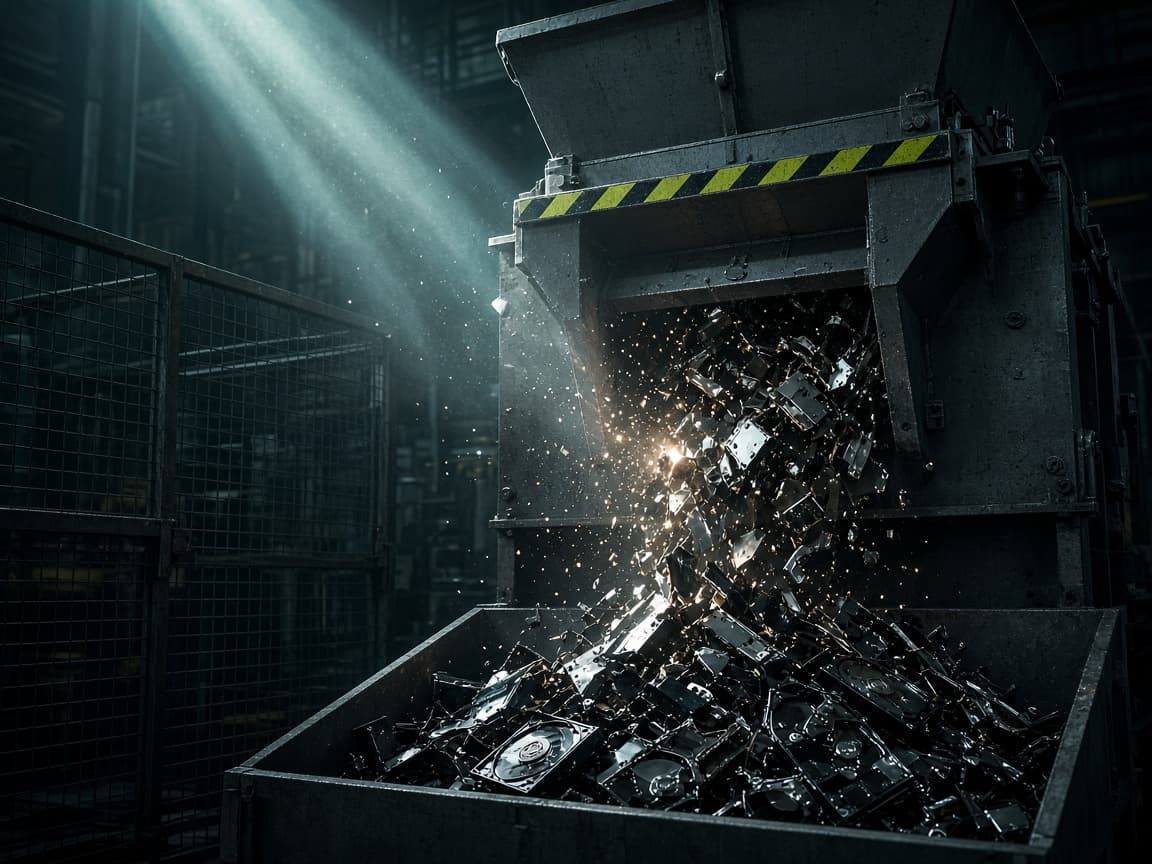
New York organizations retire laptops, desktops, servers, and storage that still hold mail, files, and credentials. Destruction services exist because the data matters more than scrap value.
Tech Recyclers isolates data-bearing devices, applies certified wipe, degauss, or physical destruction, and ties sanitization records to logged assets. On-site crushing is available when written policy requires media to stay on the floor until destroyed.
Published certifications are R2v3, ISO 9001, ISO 14001, and ISO 45001 from Amtivo, valid through January 2, 2028. R2v3 scope includes logical and physical data sanitization. We do not claim NAID, NIST, DoD, or HIPAA certifications unless they appear on our certifications pages.
Methods we use
Logical sanitization is a certified wipe when the device can be erased through a documented process. Degaussing addresses magnetic media that requires field-level erasure. Physical destruction applies when policy, condition, or risk requires non-readable media.
On-site destruction fits NYC sites where drives cannot ride on a truck. Crews can crush media in view, then collect the remaining electronics on the same commercial pickup.
- — On-site hard-drive destruction
- — Degaussing and secure shredding
- — Sanitization records for audit
- — Screened technicians for site access
- — Certificates of destruction when required
Enterprise and server storage media
Server decommissions generate the densest data-bearing load: drives and SSDs inside hosts, array disks, and sometimes loose hot-spares. The same certified wipe, degauss, and physical destruction methods apply — with logging tied to the parent asset or serial list you provide.
When a project starts with rack removal, plan destruction requirements before pickup. Server recycling and data destruction should be one conversation for infrastructure teams.
Hard drives, SSDs, and data-bearing devices
Hard drive destruction searches and broader data-bearing device disposal both map to the same operational program: identify media, apply the agreed method, document the outcome. Mixed loads of computers and loose drives are common in New York office retirements.
If only part of a lot requires destruction, mark those devices before pickup. Separating destruction and recycling piles on the dock prevents serial numbers from being lost in a mixed stack.
How destruction fits a larger NYC pickup
Most destruction work attaches to commercial pickup. Crews collect computers, servers, and office electronics, isolate data-bearing components, and apply the method you specified. Processing continues at Tech Recyclers facilities after secure transport.
What to confirm before we staff the job
Note whether a witness is required, whether cameras are allowed, and whether media is still installed in live systems. A cart of loose drives is a different visit than an array that must be powered down first.
Common questions
- Do you destroy drives inside decommissioned servers?
- Yes. Drives and SSDs in servers and storage arrays are logged and processed with certified wipe, degauss, or physical destruction before equipment is released from our process.
- Can you destroy drives on-site in New York City?
- Yes. On-site hard-drive destruction is a published service when media cannot leave the building.
- What destruction methods do you use?
- Certified wipe, degauss, or physical destruction — the same methods described on our national data-destruction service page.
- Do you provide sanitization records?
- Yes. Sanitization records and certificates of destruction are issued when audit needs them.
- Can you handle data-bearing devices from a server decommission?
- Yes. Server and data-center pull-outs are a routine NYC job; see server recycling for rack-scale work.