
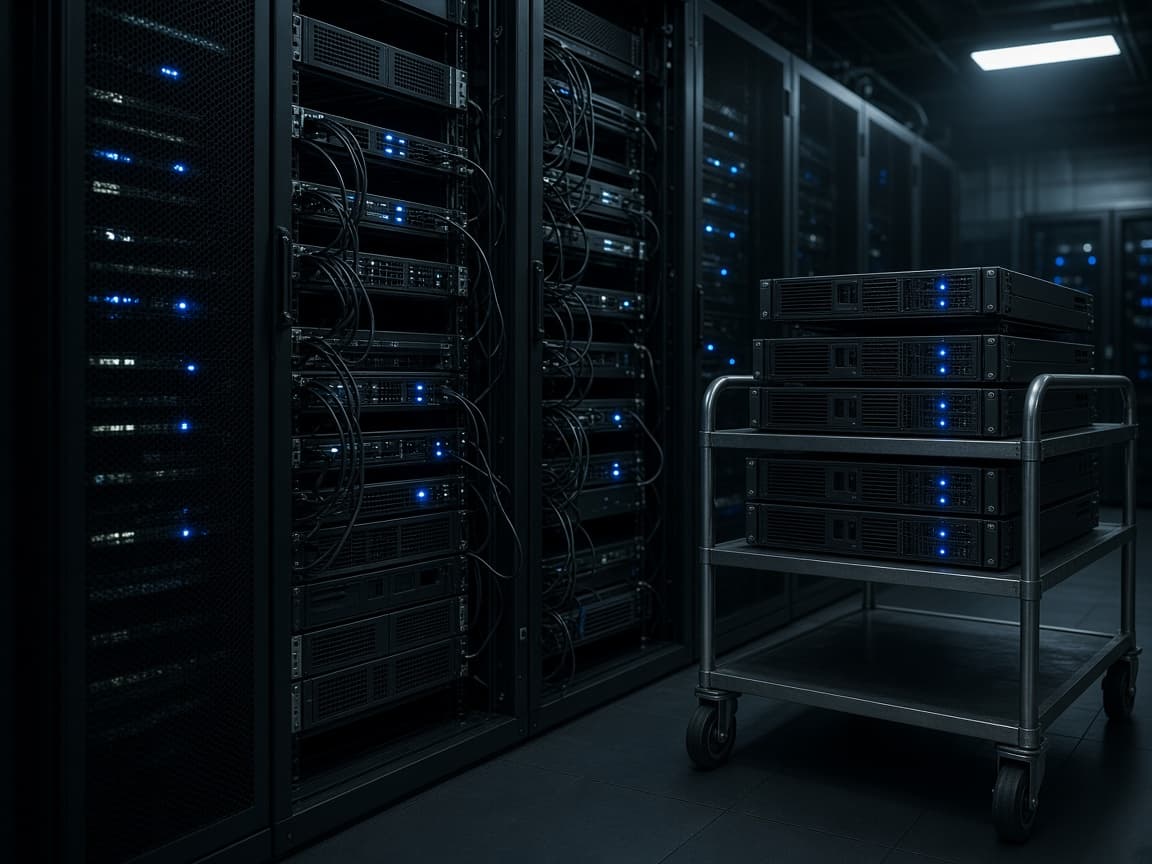
Server recycling in New York City is an infrastructure project, not a desktop cleanout. Retired hosts still carry drives, arrays still hold copies of production data, and racks rarely move on a standard freight schedule. CIOs, infrastructure managers, and facilities teams need accountability from the loading dock through final disposition.
Tech Recyclers provides data center decommissioning as rack-to-dock removal with screened technicians, asset logging, and certified wipe or physical destruction on data-bearing devices before equipment leaves our custody. This NYC page covers pickup logistics across the five boroughs; the same program applies to colocation suites, enterprise data rooms, and multi-rack refresh projects.
Tech Recyclers operates a 30,000-square-foot recycling and processing facility for commercial IT equipment. That operational scale supports substantial commercial server and data-center loads collected from New York City and processed through R2v3 standards — separate from local NYC coordination for scheduling and project intake.
Server and compute hardware
We recycle and decommission the server platforms organizations actually retire: rack-mount and blade systems, tower servers used in smaller data rooms, associated rail kits and chassis, and the compute nodes pulled during hypervisor or cloud migration projects.
- — Rack servers and blade enclosures
- — Tower servers and workstation-class hosts used as servers
- — Server racks, cabinets, and mounting hardware
- — Associated cables, HBAs, and enterprise compute accessories
Storage, backup, and data-bearing systems
Storage is where server decommissioning becomes a data-security project. Arrays, JBOD shelves, backup appliances, and loose enterprise drives are logged, isolated, and processed through your agreed sanitization or destruction method before reuse or recycling.
- — SAN and NAS storage arrays
- — Enterprise disk shelves and backup hardware
- — Hard drives and SSDs installed in servers or arrays
- — Tape and legacy backup media where included in the load
Network, security, and data-center infrastructure
A server room decommission usually includes the network and power stack around the compute. We take switches, routers, firewalls, load balancers, patch infrastructure, UPS units, PDUs, and related telecommunications gear as part of a coordinated pull — not as an afterthought once racks are empty.
- — Core and access switches, routers, and firewalls
- — Network modules, transceivers, and structured cabling
- — UPS systems and power distribution units (PDUs)
- — Telecommunications and enterprise networking hardware
Data center decommissioning process
A disciplined decommission reduces risk for infrastructure and information security teams. We align on inventory scope, access windows, and data requirements before trucks are scheduled.
- — Scope the project: equipment list, data-bearing devices, and building rules
- — Schedule NYC pickup around maintenance windows or after-hours access
- — Remove rack equipment with screened technicians and site-access training
- — Log assets and segregate data-bearing media at intake
- — Sanitize or destroy drives; reuse or recycle servers and infrastructure
- — Provide certificates of recycling or destruction when your program requires them
Server recycling, data destruction, and ITAD
Every server carries data-bearing components. Server recycling therefore ties directly to secure data destruction: certified wipe, degauss, or physical destruction, with on-site crushing when media cannot leave the building. When serial tracking, remarketing, or formal disposition decisions matter, the same project is also ITAD — asset identification, value recovery on working gear, and documented outcomes for auditors.
Infrastructure leaders should plan server disposal and data destruction together. Facilities teams should not treat racks as scrap while security teams still own the drives inside them.
NYC logistics for enterprise server projects
Manhattan and borough data rooms often lack suburban loading docks. Freight elevators, certificate-of-insurance requirements, escorted access, and narrow maintenance windows shape how equipment leaves the building. We plan crew size, dismantling, and staging with your facilities and IT contacts before arrival.
When drives must be destroyed before transport, on-site hard-drive destruction can run first; servers, switches, and remaining hardware still leave on the same commercial pickup program used nationally.
Enterprise buyers we support
This page is written for decision-makers responsible for capacity, security, and lease obligations: IT directors and infrastructure managers, data-center and facilities teams, information security and compliance staff, MSPs managing client retirements, and property managers coordinating tenant IT removals.
You should leave with a clear path: what we will pick up, how data-bearing devices are handled, what documentation you can receive, and how equipment moves into Tech Recyclers processing after secure transport.
Remarketing and recycling outcomes
Working servers and enterprise hardware may qualify for buyback after intake and testing. End-of-support or damaged systems typically move to recycling after the data step. We purchase used servers, computers, and laptops from New York City businesses when equipment still has life — without promising value before we see the lot.
Common questions
- Do you recycle servers in New York City?
- Yes. Server recycling and server disposal for commercial loads are core services, with pickup across all five boroughs.
- Can Tech Recyclers handle an entire server room?
- Yes. Projects range from a few racks to full data-room or colocation decommissions. Describe rack count, access rules, and timeline when you request service.
- What types of server equipment can be recycled?
- Rack, blade, and tower servers; storage arrays; racks; switches, routers, and firewalls; UPS and PDU gear; drives and enterprise networking hardware — tell us your mix before the pull.
- What happens to hard drives inside retired servers?
- Data-bearing devices are logged and processed with certified wipe, degauss, or physical destruction before release from our custody. On-site destruction is available when policy requires it.
- Can you remove racks and networking equipment with servers?
- Yes. Decommissions typically include the network and power infrastructure in the same coordinated pickup.
- Can you handle data-center equipment refreshes?
- Yes. We schedule around maintenance windows, log assets, and apply the same chain-of-custody standards used for full decommission projects.
- Do you provide NYC pickup for server equipment?
- Yes. Free commercial pickup is a published service for businesses and institutions, including after-hours access when buildings require it.
- What documentation is available?
- Certificates of recycling and destruction and sanitization records are issued when audit or vendor programs require them.
- Can equipment with remaining value be reused or remarketed?
- Yes, when intake and testing show the hardware still has life. Remaining equipment is recycled under a zero-landfill electronics policy.